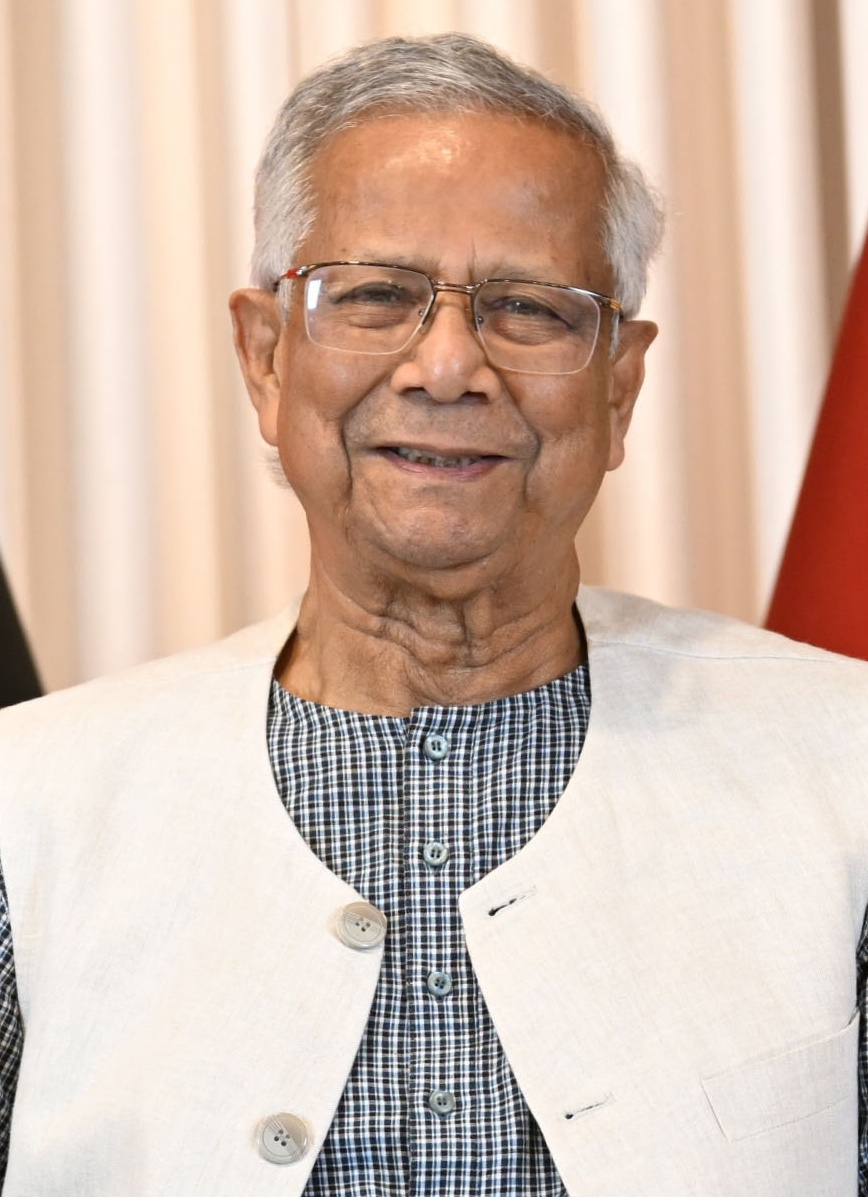
Muhammad Yunus in 2024: A Living Legacy of Microcredit, Education, and Global Leadership
Muhammad Yunus, a name synonymous with social innovation and poverty alleviation, continues to be a figure of immense global significance in 2024. This Bangladeshi social entrepreneur, banker, economist, and civil society leader is perhaps best known as the architect of modern microcredit and microfinance, a revolutionary concept that earned him the coveted Nobel Peace Prize. Beyond his celebrated work with the Grameen Bank, Yunus's journey is a testament to the power of education, unwavering dedication, and a vision for a world free from poverty. As he navigates a new, prominent role in his home country, his story resonates with renewed importance, challenging conventional notions of wealth and impact.
The Formative Years: Education and Early Influences
Born on June 28, 1940, in Hathazari, a village in Chattogram (formerly Chittagong), Bangladesh, Muhammad Yunus's early life laid the groundwork for his future humanitarian endeavors. He was the third of nine siblings, a childhood amidst a bustling family that moved to the city of Chittagong in 1944, where he attended Lamabazar Primary School. His academic prowess was evident early on; he passed his Matriculation examination from Chittagong Collegiate School, achieving an impressive 16th rank among 39,000 students in East Pakistan.
Yunus was not merely a diligent student; he was an exceptionally active young man. His involvement in the Boy Scout movement saw him travel extensively, attending famous Jamborees in India and West Pakistan in 1952, and even Canada in 1955. These international experiences undoubtedly broadened his perspective and instilled a sense of global citizenship. His talents extended to cultural activities, too, participating in drama and earning awards, demonstrating a multifaceted personality from a young age.
His academic journey continued at Dhaka University, where he enrolled in the Department of Economics in 1957, completing his BA and MA between 1960 and 1961. This strong foundation in economics would later become the intellectual backbone for his groundbreaking financial models. Upon graduation, he was appointed as a lecturer in Economics at Chittagong College in 1961, marking the beginning of his professional life as an educator.
Driven by an insatiable quest for knowledge, Yunus secured a prestigious Fulbright scholarship in 1965, enabling him to pursue advanced studies in the United States. He earned his Ph.D. in economics from the renowned Vanderbilt University. Following his doctoral studies, he served as an assistant professor of economics at Middle Tennessee State University in Murfreesboro. During this period, he also demonstrated a deep commitment to his homeland, actively forming committees and publishing newsletters in Nashville to support Bangladesh's liberation movement in 1971. This blend of academic rigor and social consciousness set the stage for his extraordinary future.
From Academia to Microfinance: The Genesis of a Revolution
The turning point in Muhammad Yunus's career came after his return to Bangladesh following its liberation. He was appointed to a planning commission by the government, but it was his direct observation of extreme poverty in the villages surrounding Chittagong University that ignited his revolutionary idea. He encountered villagers trapped in a vicious cycle of debt, borrowing small sums at exorbitant interest rates from moneylenders, unable to escape their predicament despite their hard work. It struck him that traditional banking systems, designed to serve the wealthy, completely overlooked the needs of the poorest.
In 1976, Yunus began a simple experiment. Using his own money, he lent small amounts – what he termed "microcredit" – to 42 women in the village of Jobra, allowing them to purchase raw materials for their crafts. The loans were repaid, defying the conventional wisdom that the poor were not creditworthy. This powerful realization led to the establishment of the Grameen Bank Project in 1976, which later became a full-fledged bank in 1983. Grameen Bank pioneered the concept of microfinance, offering small, unsecured loans to impoverished individuals, primarily women, to help them start or expand small businesses. This model was built on trust, group responsibility, and simple repayment plans, dramatically empowering millions who had been excluded from mainstream financial services.
His groundbreaking work fundamentally challenged economic orthodoxy and global development strategies. The success of Grameen Bank demonstrated that even the poorest of the poor could be reliable borrowers and entrepreneurs, turning despair into economic opportunity. This concept inspired numerous similar programs worldwide, proving that a different approach to development could yield profound results. To delve deeper into the origins and impact of this pioneering institution, explore Microcredit Visionary: Muhammad Yunus and the Grameen Bank.
The Nobel Recognition and Global Impact
In 2006, the world recognized the profound impact of Muhammad Yunus's vision. He, along with the Grameen Bank, was jointly awarded the Nobel Peace Prize for their efforts "to create economic and social development from below." The Nobel Committee highlighted microcredit as a powerful tool against poverty and a means to promote democracy and human rights. This recognition not only celebrated Yunus's achievement but also brought global attention to the efficacy of microfinance as a sustainable solution for poverty reduction.
The Nobel Peace Prize further amplified Yunus's voice on the international stage, allowing him to advocate for a new paradigm of "social business" – enterprises that are designed to solve social problems, with profits reinvested into the business rather than distributed to owners. His ideas extended beyond microcredit, encompassing initiatives like Info Lady Social Entrepreneurship, which brings technology and information services to rural communities in developing countries, and advocating for a world free of poverty, unemployment, and net carbon emissions.
Muhammad Yunus in 2024: Leadership and Legacy
As of 2024, Muhammad Yunus, born on June 28, 1940, is 83 years old, turning 84 on his birthday later this year. His physical stature is noted as 1.75m tall and weighing 63kg, but his impact on the world far outweighs these metrics. He continues to inspire as a thought leader and advocate for social change, participating in global forums and initiatives.
Significantly, 2024 has seen Yunus take on a pivotal new role in Bangladesh. Following a mass uprising in July 2024, which led to a transition in democratic governance, Muhammad Yunus was appointed as the 5th Chief Adviser of Bangladesh. This interim role, expected to last until 2026, places him at the helm of his nation during a critical period. His leadership in this capacity further underscores his lifelong commitment to public service and national development. This appointment signifies a remarkable chapter in his illustrious career, moving from economic innovation to direct political stewardship. For a deeper dive into his recent political involvement and enduring impact, read our in-depth analysis: Muhammad Yunus: Bangladesh's Chief Adviser & Nobel Legacy.
Beyond his public persona, Yunus's personal life reflects a journey of connection and family. He married Vera Forostenko, a Russian literature student, in 1967, and they had a daughter, Monica Yunus. Later, he married Afrozi Yunus, a physics researcher, and they have a daughter, Deena Afroz Yunus, born in 1986. His parents were Hazi Dula, a jeweler, and Sufia Khatun. These personal relationships form the bedrock of a man whose public life has been dedicated to improving the lives of others.
Beyond Monetary Value: The True Muhammad Yunus Net Worth
When discussing global figures like Muhammad Yunus, one might naturally wonder about his personal wealth or **muhammad yunus net worth**. However, for a man who dedicated his entire adult life to alleviating poverty and empowering the poor, his "net worth" transcends conventional monetary measurements. Yunus's wealth is not accumulated in bank accounts but in the profound societal capital he has generated: the millions of lives lifted out of destitution, the entrepreneurial spirit ignited in marginalized communities, and the fundamental shift in how the world views poverty and economic development.
His work fundamentally challenged the capitalist notion that wealth is solely defined by financial assets. Instead, Yunus demonstrated that trust, opportunity, and human dignity are invaluable currencies. The Grameen Bank's model, for example, prioritizes social return over financial profit, a philosophy that informs Yunus's personal and professional life. His contributions have created a legacy that is immeasurable in monetary terms but deeply significant in human impact. The inspiration he has provided to countless social entrepreneurs, policymakers, and ordinary citizens around the globe constitutes a legacy of wealth that few can rival.
His career, whether as an entrepreneur, economist, or professor, has always been devoted to making tangible improvements in people's lives. The layers of projects he has undertaken, from the initial microcredit experiments to advocating for social business, all stem from a consistent ethos: that poverty is not a curse but a man-made problem that can be solved through innovative thinking and compassionate action. This enduring commitment and the global transformation it has sparked represent the true and enduring **Muhammad Yunus Net Worth**.
In conclusion, Muhammad Yunus in 2024 remains a towering figure whose influence spans economics, social development, and governance. His journey from a bright student in Bangladesh to a Nobel Peace Prize laureate and now the Chief Adviser of his nation is a testament to the power of a single individual's vision. His pioneering work in microcredit and relentless advocacy for social business have reshaped our understanding of poverty, opportunity, and human potential. Yunus's legacy is a powerful reminder that true wealth lies in the positive change we bring to the world, a mission he continues to pursue with unwavering dedication.
